LED FlashCube

The E-TTL version was the very first to hit the market, as I blogged about previously on the topic of Profoto's B1 and TCU I won't be covering that much other than what's new. One interesting thing to note, I met an owner of the B1's at a photo-shoot and he said that the canon version will fire the flash unit on a Nikon but won't do anything else. I was impressed with their functionality, I watched as his wife was firing away with no misfires or any other issues.
In TTL mode pocket wizards latest generation of triggers and firmware modulate the power settings in relation to the resulting shots from the camera, but it is only measured and adjusted after the shot is taken not before the shot happens. Because of this P.W. recommends taking multiple test shots prior to going forward with whatever your planned shoot is.
Further camera support is expected but none have been announced, the most interesting markets for them to open up to Profoto would be the Sony and PhaseOne camera owners. Those guys would be very keen on expanded functionality with these lights I suspect. I have no clue what kind of gear is actually compatible with camera like the digital backs from PhaseOne.
The best thing to happen to Phottix triggers since Odin v1.5 came out, this promises to be the most sensible and simple interface layout I've seen so far. I just hope that it turns out to be true. OSD menu based devices rely too much on navigating through buried sub-menu's to get to features that get used the most rather than allowing the user make those decisions.
This device looks a lot more like users had some serious feedback in the interface design phase rather than allowing in-house engineers who don't use the equipment in a working environment to decide for everyone else.
Delivery of the TCU to various markets is expected in Q1 of 2015.
Feature List:
The newest twist to this unit is the encryption key system that it encodes to it's signals when paired with compatible strobes and speed-lights. What this means is that multiple separate photo-shoots happening within reception range of each other using the same gear won't cause misfires, each persons gear will only respond to signals with the correct key. Theoretically the key system will be diverse and complex enough there should be little or no possibility of overlap, this feature is unique in this industry to my knowledge. Wireless phones have used dumbed down versions of this for decades, i'm surprised the photography industry is so slow to pick up on it, particularly when taking into consideration the vast number of radio triggers out there with overlapping frequency allotments.
Mitros Owner FeedBack:
"I bought 2 of these kits and I gotta say the value is GREAT! The built quality of every item is definitely good. I ran tests and also used them in the field. Although a great value, I would like to alert everyone about some of the things that I ran into:
Phottix Indra 500 MonoLight


At first blush the Canon 7D MKII looks as if Canon was set to break all the precedents set by themselves and other camera makers on what camera was meant for sport activities, which was normally separated by a very healthy price barrier (Nik 4DS, Can 1DX, $7000 MSRP). High end cameras with upwards of 8+ frames per second of sustained shooting were typically restricted to only the most expensive DSLR's, this camera promised 10 FPS but there is something fishy about the stats as pointed out by some readers of DP Review.

The D800E/D810 could definitely be considered a serious contender towards non-group think from their market and product guys, I applaud efforts like this. The 810 represents the best of all things 800 and 800E, the 800E had no AA filter. They didn't actually remove it from the sensor it was just disabled at the factory. When they came out with the 810 hot on the heels of the successes of the 800E, they removed the Bayer AA layer and several other layers of glass resulting in overall increased in image quality over the previous generation.
The Nikon D750 has great features but this is more evolutionary improvements than anything else, focus peaking/focus masks in camera as of yet are still about as tangible as bigfoot, lots of talk about it but no evidence it exists. Hopefully the updated 750 lives up to the reputation that made the 700 one of the most loved full frame cameras in the Nikon line-up. The D700 was standard issue for combat photographers who were on active duty overseas, it is still actively being used now.
Someone is still churning up the rumors of an impending medium format entry from canon, considering this has been talked to death since 2010, I am not so sure there is any truth to that.
New tech from Canon in the form of a 26+ megapixel Foveon derivative full frame sensor is the only real outcome possible at this stage since Nikon and Canon both seem incredibly reluctant to rock the boat in any way that suggests radical forward thinking rather than just evolutionary product changes of their existing product lines. Someone seems very confident that Canon is announcing something new, tangible and groundbreaking in the DSLR department in Q1,Q2 of 2015.
A few Items every photographer should probably have at least one of in their arsenal of studio gear.
Vflats - Inexpensive and highly useful light shaping tools for carving a corner of a room into a legit studio space in no time at all. Clay Cook turned me on to this notion a while back.
Canvas backdrops - They come in infinite varieties the quality and uniqueness of them varies.
- Oliphant Studios creates some of the most interesting custom canvas backdrops that i've seen so far.

And now for something entirely different.. Not only is it a cube which is something i've not seen before, but it is also LED based and solid state. The front is a circular fresnel lense.
Not much is known about this so i'll point to Flash Havoc and call it good.
This unit is approximately 640 bucks and is fairly heavy due to the heat sink that keeps the LED from overheating.
Profoto TTL-N TCU
 |
| 1.2 years after myself and I'm sure countless others bitched about the lackluster support for cameras other than Canon, the TTL-N emerged. |
I also had some brief hands on time with their Nikon D4S and the new A7S from sony, I did not want to impose so I did not linger for too long except to push a few buttons and take some test shots. I was impressed with those as well.
This TTL-N unit has only been on the market for 1 month, I expect there will be growing pains popping up as more users adopt it but the initial reviews from owners of it are all generally positive.
The reports so far indicate that the trigger does not allow sync above 1/200 or 1/250 (native X-sync speeds for Nikon), so H.S.S is out of the question at this time. Last I heard they were not available for Canon users either but Profoto did say they were working on it, so we could expect to see H.S.S/FP type functionality soon.
Nikon users say the unit has a glitch, the unit defaults to TTL operation every time it powers down and is powered back up (does not store the last state it was in prior to powering down), this is not a deal breaker for me but that would be annoying.
TTL operation wipes out whatever custom settings you left on the B1 heads that triggered but that is no different than my experiences with Pocket Wizard's "Power Tracking Control-TL™" feature, so I am not surprised by that at all. I encountered the same issues when I used my Sekonic to set the Einstein, and then fired my camera with the (TTL) power tracking active. Feedback from Nikon users on the results of TTL operation is kind of revealing, it almost sounds identical to Pocket Wizard TTL.
In TTL mode pocket wizards latest generation of triggers and firmware modulate the power settings in relation to the resulting shots from the camera, but it is only measured and adjusted after the shot is taken not before the shot happens. Because of this P.W. recommends taking multiple test shots prior to going forward with whatever your planned shoot is.
Further camera support is expected but none have been announced, the most interesting markets for them to open up to Profoto would be the Sony and PhaseOne camera owners. Those guys would be very keen on expanded functionality with these lights I suspect. I have no clue what kind of gear is actually compatible with camera like the digital backs from PhaseOne.
Phottix Odin II TCU
 |
| Phottix Odin II |
This device looks a lot more like users had some serious feedback in the interface design phase rather than allowing in-house engineers who don't use the equipment in a working environment to decide for everyone else.
Delivery of the TCU to various markets is expected in Q1 of 2015.
Feature List:
- 5 groups A, B, C, D, E
- 2.4 GHz frequency, Range 100m
- 32 channels with Digital ID
- Group buttons and control dial for fast power changes
- TTL Power Control +/- 3 EV
- Manual Power Control 1/1 to 1/256
- Flash Zoom control
- High Speed Sync – up to 1/8000s
- Second Curtain Sync
- AF Assist Beam
- Compatible with Indra 500 TTL, Mitros+, Odin, Strato II, Atlas II
- Modeling Light Control (Indra 500 only)
The newest twist to this unit is the encryption key system that it encodes to it's signals when paired with compatible strobes and speed-lights. What this means is that multiple separate photo-shoots happening within reception range of each other using the same gear won't cause misfires, each persons gear will only respond to signals with the correct key. Theoretically the key system will be diverse and complex enough there should be little or no possibility of overlap, this feature is unique in this industry to my knowledge. Wireless phones have used dumbed down versions of this for decades, i'm surprised the photography industry is so slow to pick up on it, particularly when taking into consideration the vast number of radio triggers out there with overlapping frequency allotments.
Phottix Mitros+ For Nikon & Cannon:
 |
| Averages $399 at BH-Photo & Adorama |
 |
| Mitros+ Interface Dialogues. |
I have been thinking a lot lately about lighting and alternative setups to what I do and don't have currently, if for no other reasons then to have backups. This product showed up and I was immediately excited about it after doing some initial reading, however after it spent time on the market there were numerous flaws that turned up. It is beginning to look more and more like a SB-900 from Nikon in terms of the defects that are showing up.
Before I dive into the negatives on this product let's list out the positives:
Serious problems have been reported, such as:
Before I dive into the negatives on this product let's list out the positives:
- Integrated radio transceiver (a market first for speed-lights)
- Available for Sony, Canon, Nikon
- Native wireless and on camera H.S.S for Canon & Nikon
- Full wireless TTL operation is claimed (I have my doubts).
- First and Second curtain sync modes are supported.
- The upcoming Odin II's features are supported except for ODS, that could change in a firmware patch.
Serious problems have been reported, such as:
- Severe over heating, the front lense cracks, melts or shatters after 50+ consecutive full power shots with zoom head set to 24mm.
- In TTL mode it is exhibiting symptoms of uneven power output, Nikon users report more problems with this then canon, the consensus so far is that as long as TTL is not used power output is stable.
- Power adjustments are problematic, complaints floating around after some intensive testing show little or no difference in power output below 1/2 power. Full power looks very similar to half power. Canon users say the full power output is slightly less than the most top of the line canon flash. Operating in manual does appear to fix some of it.
Phottix is a fairly small company with an equally small staff with multiple new high end, high profile products that are either recently arriving on the market or rumored to be on store shelves by Q1 of next year, don't expect fast replies right now. They are swamped with complaints.
The following is some recent testimony from an owner of the product (not me).
Mitros Owner FeedBack:
"I bought 2 of these kits and I gotta say the value is GREAT! The built quality of every item is definitely good. I ran tests and also used them in the field. Although a great value, I would like to alert everyone about some of the things that I ran into:
- Be aware of the adaptor that comes with the Mitros+ to fit the Nikon cable when using external battery packs. If your cable is from either Nissin or Bolt it will NOT FIT the adaptor. You need either the Quantum or the Impact version of the Nikon cable.
- When using a Mitros+ to fire another remote Mitros+, the remote Mitros+ will fire the TTL pre-flash even if the Mitros+ transmitter flash is setting the remote flash to fire at a manual power. This does not happen if I use the Odin transmitter to fire the remote flashes in manual instead of using the Mitros+ as the transmitter. This does drain batteries faster, makes recycle time longer, and it's pretty annoying!
- For some reason, there is barely any difference in terms of flash output from firing at full VS 1/2 power. I tested this on both Mitros+ and they both show the same issue. I would like other users to test it and let me know if they notice the same thing. Put the camera on a tripod, take a picture at full and then at 1/2 power and tell me if you see a stop difference in light.
- Maybe it's me, but I cant turn off the blinking red beam of light that the mitros+ shoots every couple seconds when used as a remote flash. It's not a deal breaker but videographers and other photographers might hate you for it. I set my 2 flashes off camera in a church, and it does become distracting.
- Even if you turn of the beeping sound from navigating though the menus. If you press an hold a button (for example the arrow button to change power from 1/1 to 1/128), The flash will start beeping, particularly annoying in a church!
- The recycle times are a little disappointing to me. I have been using the Nissin MG8000, it has the best power output, recycle, consistency, never overheats, and the interface is the easiest and most practical I have used!
- I have owned the SB700, SB800 and SB900. I would say this Mitros+ flash is somewhere between the SB800 and SB900.
- In opposition to the Phottix Strato II, both the Mitros+ nor the Odin transmitters will work to fire off camera flashes on my Fuji X100s. Actually, if you use the Mitros+ on the Fuji it will fire FULL POWER all the time UNLESS you have it set to optical transmitter mode where then you can control the power on the Mitros+ when u use it on camera.
Most zoom-able flashes on the market do not extend beyond 105mm, Nikon's SB-910 is the only high end flash head that I know of offering zoom to 200mm. Nissin and some Nikon flashes are in my opinion the best top of the line flash heads for use in a professional environment. Most would agree their prices is ridiculously high compared to competitors.
If you're needing brute force traditional non-barebulb flash action that fires non-stop (hundreds of times at t1) with no reduction in power output or thermal cut-out due to heat, the Nissin MG8000 Extreme is unparalleled.
I was impressed to see the SB-910 did have almost as good a showing as the Nissin, but Nissin still won over every other flash in a brute force test, running into the hundreds of consecutive flashes. The reviews from the bulk of Mitros+ owners indicates it is not suitable for this kind of non-stop paparazzi frenzied shooting style. Based on feedback from owners of the Mitros+ I suspect that in an out door shoot where I would be strobing many hundreds of times in an hour or two, I think this Mitros+ would just melt or explode. I hope phottix realizes the magnitude of the mistakes that were made and fixes them.
Metz was until recently not a known entity to me (no it is not a sports team!), but to old-timey professionals the Metz "Potato Masher" as it was once called is a long time favorite known for being able to fire endlessly at full power with no side effects and 100 percent up time. The original Metz that had this reputation was almost entirely analog although some enterprising gadget hound pro's have found ways to put in ad-hoc circuitry to make it compatible with modern TTL signaling from what i've heard.
Metz
 |
| Metz 64 AF-1 Speed Light |
This is the very latest model offered by Metz, a german company in case you were not aware. It was introduced early this year according to press releases. It is the first model that I know of to feature a touch screen, how useful this will be is anyone's guess. I think this type of screen will be difficult to use in outdoor settings with harsh light during daylight hours.
It does not feature integral RF transceiver but it does support the long time standard of IR signaling for TTL communications (I think), it also supports almost every camera out there.
Features such as the 200mm zoom head, make it seem like Metz wanted to provide a rival to the feature sets found in the SB-910 from Nikon, which as I stated previously is one of few models out there to feature a 200mm zoom capability. I don't have any hands on time with this model but it looks promising and much more compact than competing models in its class. It has a very sturdy looking metal foot, which I hope does not wiggle and wobble all over the place like almost every other shot product i've tried on Nikon.
The wobble factor is one of my biggest complaints about modules that sit in the hot-shoe, it becomes much more obvious the higher up the module sits on the hot-shoe. It can drastically affect the stability of the camera, especially if the D-SLR body itself is already quite heavy like many Pro body D-SLR's are (900+ grams). It is very distracting sometimes when i'm framing shots using on camera flash.
The list price of this unit is $399, the exact same prize point as the interesting but very troubled new product from Phottix, the Mitros+.
 |
| For reference purposes this unit is the Metz 45 classic, Masher style Flash. |
If the Metz 64 AF-1 can come close to the sheer brute force capability of their now very ancient "Potato masher", or the masher's nearest modern digital cousin from Nissin, the 8000 series then it will be a very fine product indeed. Metz still produces the Potato Masher style flash head but it is all digital now and MSRP lists it at 1000 dollars US.
Phottix Indra 500 MonoLight
 |
| New Phottix portable studio Strobe, Indra 500. MSRP $1300 w/battery+inverter. |
Everybody and their uncle wants to be the next contender to steal Profoto's near permanent spot in the lime light, this one may come close. It does not have an integral battery like the Profoto B1 Air that I suspect it is attempting to compete against, but it has a lot of the elements that made Profoto attractive to customers with some added twists. The battery life claims 400 full power shots without modeling light, 380 with modeling lamp active was claimed somewhere in the published specs by Phottix.
It is fully compliant with all the most advanced features in the soon to be released Odin II commander unit. In-store delivery ETA is currently un-known but it is eagerly anticipated by many owners of Phottix's existing products.
It is not clear whether these plug-in ports can be adapted to power non-Phottix devices but I believe it is possible to power other Phottix speed lights from this light.
It does feature double the amount of shots claimed by Profoto, and very nearly the same number of full power shots claimed by the Paul Buff VLX when paired with an Einstein or other strobe with comparable output ratings. It is at a much higher price point but with a similar configuration, external battery pack anchored to the base of the support structure.
It is not clear whether these plug-in ports can be adapted to power non-Phottix devices but I believe it is possible to power other Phottix speed lights from this light.
It does feature double the amount of shots claimed by Profoto, and very nearly the same number of full power shots claimed by the Paul Buff VLX when paired with an Einstein or other strobe with comparable output ratings. It is at a much higher price point but with a similar configuration, external battery pack anchored to the base of the support structure.
Profoto B1 Air
I know this has been talked about no end but I am excited to say that later this month I will be adding this beast to my arsenal of lighting gear, it was either that or wait until phottix gets off their butts to release a comparable product. By the time they release what i'd like i'll already be off on my next adventure, traveling to europe next year; that is the plan anyway.
That also means that I will be able to have hands on time with it and offer my own impressions on it, not that what I say may be more helpful than some dude like Moose Peterson or somebody else.
My impressions of the material offered up by Profoto supported media postings is pure fluff, almost none of them really go into detail about the product. The photographers featured in them spend most of the talking themselves and showing a little of how they work with the product but not an actual detailed how-to on the product I would expect.
There is probably only one photographer that does go into depth about the actual operation of the unit during a shoot, I think that was Jared Platt. If you do a vid promoting how it all works, then you should show what people want to see, the product itself and not much else. Not some guy chatting up his biz and showing how amazing he is when he is using the product.
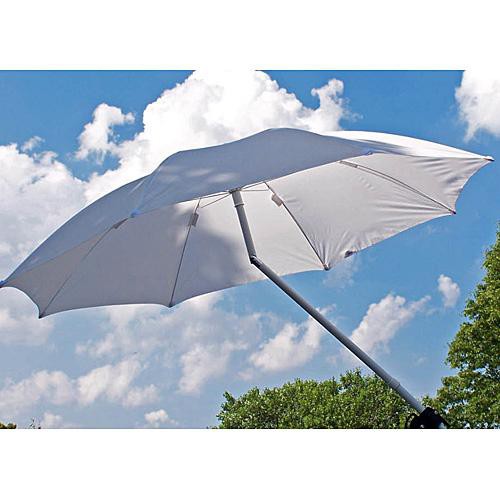
I also plan to review Glow Parapop 28 inch Umbrella, I think they will go nicely together.
Canon D7 MkII
At first blush the Canon 7D MKII looks as if Canon was set to break all the precedents set by themselves and other camera makers on what camera was meant for sport activities, which was normally separated by a very healthy price barrier (Nik 4DS, Can 1DX, $7000 MSRP). High end cameras with upwards of 8+ frames per second of sustained shooting were typically restricted to only the most expensive DSLR's, this camera promised 10 FPS but there is something fishy about the stats as pointed out by some readers of DP Review.

The D800E/D810 could definitely be considered a serious contender towards non-group think from their market and product guys, I applaud efforts like this. The 810 represents the best of all things 800 and 800E, the 800E had no AA filter. They didn't actually remove it from the sensor it was just disabled at the factory. When they came out with the 810 hot on the heels of the successes of the 800E, they removed the Bayer AA layer and several other layers of glass resulting in overall increased in image quality over the previous generation.
The Nikon D750 has great features but this is more evolutionary improvements than anything else, focus peaking/focus masks in camera as of yet are still about as tangible as bigfoot, lots of talk about it but no evidence it exists. Hopefully the updated 750 lives up to the reputation that made the 700 one of the most loved full frame cameras in the Nikon line-up. The D700 was standard issue for combat photographers who were on active duty overseas, it is still actively being used now.
Rumored releases for 2015
Sony Mirror-less 50 Megapixel CMOS based camera (Most likely the successor to the A7R).
Someone is still churning up the rumors of an impending medium format entry from canon, considering this has been talked to death since 2010, I am not so sure there is any truth to that.
New tech from Canon in the form of a 26+ megapixel Foveon derivative full frame sensor is the only real outcome possible at this stage since Nikon and Canon both seem incredibly reluctant to rock the boat in any way that suggests radical forward thinking rather than just evolutionary product changes of their existing product lines. Someone seems very confident that Canon is announcing something new, tangible and groundbreaking in the DSLR department in Q1,Q2 of 2015.
Vflats - Inexpensive and highly useful light shaping tools for carving a corner of a room into a legit studio space in no time at all. Clay Cook turned me on to this notion a while back.
Canvas backdrops - They come in infinite varieties the quality and uniqueness of them varies.
- Oliphant Studios creates some of the most interesting custom canvas backdrops that i've seen so far.
Color Edge CG277 by Eizo

Commentary on the performance of triggers and Paul Buff products:
I wrote about in a previous blog post about my experiences with Paul Buff Einstein strobe, and the P/W trigger sets that I had acquired. Originally as with all things when they are new and unknown, I was very excited to have hands on time with these and my write-up on this subject was very brief. So I wanted to expand on this in light of my recent field trip, and chances to extensively test out these products.
I have had time to review this product more thoroughly out in the field after my recent trip to Jamaica to shoot with various internationally known models, if you can do this you should definitely try it.
The P/W trigger system, specifically the TT5's appear to the point of failure in the chain. I would say it's coincidence that it happened if it were just one unit but I had several TT5's there as extra's and they all exhibited the same symptoms. It would vary, they fire fine for a little bit then they would start increasingly misfiring just minutes into the shoot after a full charge, even after swapping batteries. Misfire's would happen as close as 12 inches away from the MC2 trigger on the buff light. I tested out the TT5's by putting a speed light on one, and the other on my camera, the misfires continued to happen at an alarming rate. (75 percent failure rate)
The buff light worked fantastic, showed no indications of malfunction despite rough treatment of my baggage in multiple international airport hubs. I had bought a new product from Buff called the VLX Vagabond battery system. I am a lazy person sometimes, so of course I did not charge the battery at all prior to packing it up and deploying it to Jamaica after I had opened up the box a week prior. I did assemble it and turn it on to make sure it was working, after a full day of hundreds of shots at approximately 1/3 power or less I finally had to plug it in. I think I managed about 400-600+ pops before I finally charged it, I did not ever fully drain it in an attempt to test its durability but I felt it had lived up to my expectations of its abilities.
The fact that I was working in temperatures of up to 105 degrees and 80-90 percent humidity, with no equipment failures caused by that was equally impressive to me. The fan on the light was not audible during operation, the VLX inverter battery fan if it ever was on was also very quiet.
It was hot enough some days that I was sweating so profusely I could barely see through the camera and the back of my camera was drenched in sweat, fogged up by it in fact. I am fair skinned and of nordic heritage living in a location that probably see's less sunlight than the dreariest foggy parts of England does.
I borrowed someone else's Buff triggers after nearly blowing a gasket over the misfire issue, they worked flawlessly. The persons's who brought their Profoto kit with them also commented that they had no issues at all with misfiring either, the persons who commented that their triggers had an abnormally high malfunction rate was the photog's using the P/W system. I get these same issues at home after the trip, where there is no RF interference sources or conflicting sources of P/W signals to compete with so that rules out a few things.
I wrote about in a previous blog post about my experiences with Paul Buff Einstein strobe, and the P/W trigger sets that I had acquired. Originally as with all things when they are new and unknown, I was very excited to have hands on time with these and my write-up on this subject was very brief. So I wanted to expand on this in light of my recent field trip, and chances to extensively test out these products.
I have had time to review this product more thoroughly out in the field after my recent trip to Jamaica to shoot with various internationally known models, if you can do this you should definitely try it.
The P/W trigger system, specifically the TT5's appear to the point of failure in the chain. I would say it's coincidence that it happened if it were just one unit but I had several TT5's there as extra's and they all exhibited the same symptoms. It would vary, they fire fine for a little bit then they would start increasingly misfiring just minutes into the shoot after a full charge, even after swapping batteries. Misfire's would happen as close as 12 inches away from the MC2 trigger on the buff light. I tested out the TT5's by putting a speed light on one, and the other on my camera, the misfires continued to happen at an alarming rate. (75 percent failure rate)
The buff light worked fantastic, showed no indications of malfunction despite rough treatment of my baggage in multiple international airport hubs. I had bought a new product from Buff called the VLX Vagabond battery system. I am a lazy person sometimes, so of course I did not charge the battery at all prior to packing it up and deploying it to Jamaica after I had opened up the box a week prior. I did assemble it and turn it on to make sure it was working, after a full day of hundreds of shots at approximately 1/3 power or less I finally had to plug it in. I think I managed about 400-600+ pops before I finally charged it, I did not ever fully drain it in an attempt to test its durability but I felt it had lived up to my expectations of its abilities.
The fact that I was working in temperatures of up to 105 degrees and 80-90 percent humidity, with no equipment failures caused by that was equally impressive to me. The fan on the light was not audible during operation, the VLX inverter battery fan if it ever was on was also very quiet.
It was hot enough some days that I was sweating so profusely I could barely see through the camera and the back of my camera was drenched in sweat, fogged up by it in fact. I am fair skinned and of nordic heritage living in a location that probably see's less sunlight than the dreariest foggy parts of England does.
I borrowed someone else's Buff triggers after nearly blowing a gasket over the misfire issue, they worked flawlessly. The persons's who brought their Profoto kit with them also commented that they had no issues at all with misfiring either, the persons who commented that their triggers had an abnormally high malfunction rate was the photog's using the P/W system. I get these same issues at home after the trip, where there is no RF interference sources or conflicting sources of P/W signals to compete with so that rules out a few things.